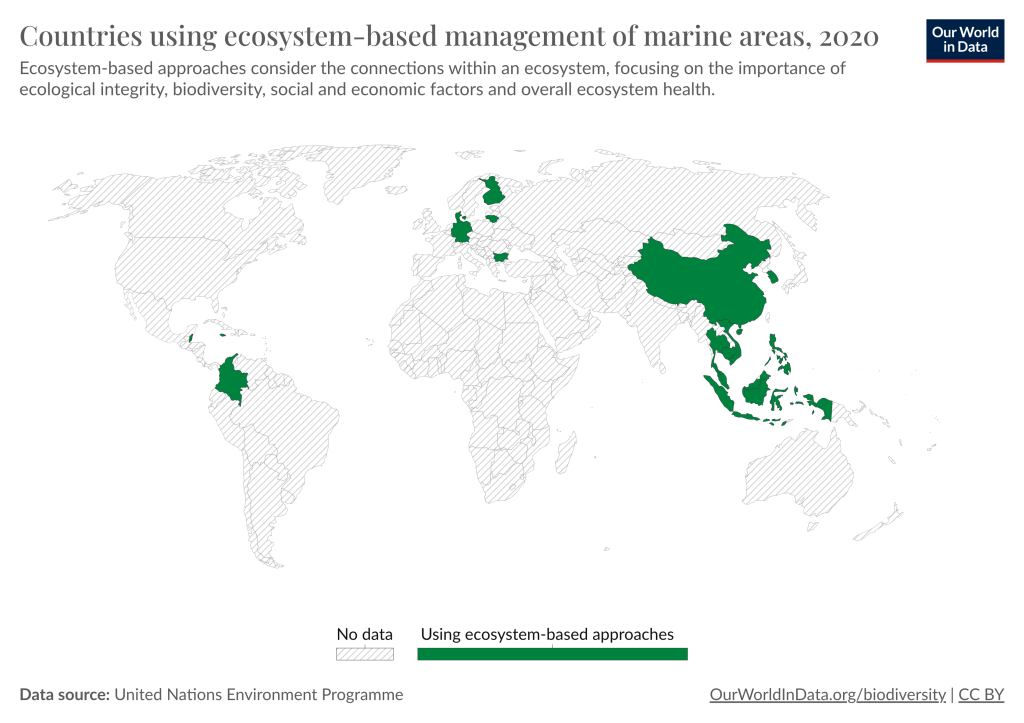
Human society depends on the seas for survival. Seas are essential for the economic prosperity of human society, social well-being and quality of life. We all rely on the seas, so we have an obligation to use them wisely. Oceans and seas are still perceived as the last wilderness of the world, but human influence has already reached them all, from the coasts and the sea surface to the deep sea floor. Multiple benefits and human uses of the seas are causing multiple, cumulative human pressures and related changes to oceans and seas, coastal marine habitats and marine ecosystems. Each human activity on land or at sea has direct and indirect impacts on the marine environment. It is therefore very important to understand the cumulative effects of human activities in view of natural changes in order to build a solid base for managing.
The main pressures affecting European seas result from: fishing, sea floor damage , pullution by nutrient enrichment and contaminants, the spread of non-indigenous species.
Marine litter and underwater noise are also of growing concern. These pressures are at the core of the MSFD but some have also been targeted by other dedicated EU policies (the Water Framework Directive, the related Habitat and Bird Directives and the common fisheries policy). The information reported under the MSFD, although incomplete, shows a low percentage of our seas where pressures are considered to be at an acceptable (good) level.
Fishing pressure affects ecosystem integrity
Fishing is one of the greatest pressures in the marine environment. It reduces biodiversity by targeting commercial fish and shellfish and accidentally killing invertebrates, mammals, seabirds and turtles. It also modifies the structure and functioning of the ecosystems in which fisheries are embedded. Unsustainable fishing levels and practices have greatly damaged European fish stocks. In 2013, the 88 % of the assessed stocks in the Mediterranean and Black Seas were overfished.
Contaminants in the marine environment
Contaminants are widespread in the marine environment, and they can be dissolved in water, stored in sediments or ingested by animals. Some of these substances occur naturally in low concentrations, and others are introduced by man. Contaminants toxic to plants and animals are liable to accumulate through the food web. Substances with endocrine-disrupting properties can impair reproduction in fish and shellfish. Evidence shows that regulatory levels for certain contaminants in seafood have been exceeded in European seas, exposing humans to contaminants through consumption. There is also the pollution of the oceans by plastics, which has many valuable uses, but which has a serious impact on the environment, so it is important to call on humans to protect the environment and the oceans.
Our World in Data team (2023) – “Conserve and sustainably use the oceans, seas and marine resources” Published online at OurWorldInData.org. Retrieved from: ‘https://ourworldindata.org/sdgs/life-below-water’ [Online Resource][Accessed 20/01/24].
Santos, C. F., Domingos, T., Ferreira, M. A., Orbach, M., & Andrade, F. (2014). How sustainable is sustainable marine spatial planning? Part I—Linking the concepts. Marine Policy, 49, 59-65.[Accessed 20/01/24].
Oegroseno, A. H. (2018). The Marine Environment and UN Sustainable Development Goal 14. In The Marine Environment and United Nations Sustainable Development Goal 14 (pp. 3-7). Brill Nijhoff.[Accessed 22/01/24].